This heading 2 is part of a section inside an article.
And here’s a paragraph
<header> element, often used at the top of a page or section)(👆 that’s a <hr> - horizontal rule!)
<hgroup><hgroup>Here’s a bunch of paragraphs, so we can see what paragraphs will look like on our site.
The <dfn> element indicates a term to be defined, usually by
the enclosing paragraph. There’s also the <abbr> element,
used in HTML (Hypertext Markup Language) to indicate an abbreviation.
Lorem ipsum dolor sit amet, consectetur adipiscing elit. Nulla euismod magna eu purus suscipit, vitae semper ligula efficitur. Suspendisse semper vel mauris id sollicitudin. Aliquam erat volutpat. Vivamus luctus est ligula, eu commodo metus ullamcorper id. Donec massa metus, cursus sit amet consequat sit amet, posuere vitae purus. Proin nec felis efficitur, scelerisque tortor quis, feugiat tellus. Sed imperdiet tincidunt dolor a molestie. Nullam tempus purus felis, quis efficitur turpis maximus et. Phasellus nec nibh commodo, elementum est ut, interdum odio. Aliquam cursus consequat tortor sit amet maximus. Fusce aliquam eleifend leo a laoreet. Donec nibh massa, lacinia sodales iaculis nec, finibus sed lorem. Etiam vitae tortor nec mi sodales malesuada.
This is a paragraph demonstrating strong, emphasised, underlined, and
highlighted text. It also contains a quotation, denoted
by a
.
<q> element
This paragraph contains examples of superscript (x2),
subscript (H2SO4),
variables like x, y & z,
an HTML <data> element,
an <time> element ().
This one contains some deleted text, some inserted text, and
some strikethrough text.
This paragraph contains a snippet of code, inside a .
You'll also see the <code> element<kbd> element used to indicate user input (like this).
Let’s check our page doesn’t blow up if somebody renders content in Ukrainian, Greek, Arabic or Hebrew:
Це абзац українською мовою, тому ми можемо переконатися, що кирилиця відображатиметься правильно.
Αυτή η παράγραφος είναι στα ελληνικά, ώστε να μπορούμε να ελέγξουμε ότι ο ιστότοπός μας υποστηρίζει σωστά τα ελληνικά.
هذه فقرة عربية، لذا يمكننا التأكد من ظهور الأبجدية العربية بشكل صحيح.
פסקה זו היא בעברית, כדי שנוכל לבדוק שהאתר שלנו תומך בעברית כראוי.
There’s also the <ruby> element, and the associated
<rt> and <rp> elements,
which are used to add pronunciation hints for text rendered
in Japanese and East Asian character sets, such as:
漢
字
or
ゆきひろ まつもと
Special characters: £ £ & & < >
Pictorial Emoji: 😀🎸🎤🦕👩🏿🚀
Pictoral Flags: 🏁🚩🎌🏴🏳️🏳️🌈🏳️⚧️🏴☠️🇺🇳
Regional Flags: 🇿🇼 🇺🇸 🇬🇧 🇦🇶 🏴
And here’s a paragraph
<div> element - a block element
with no semantic significance - or in a <span> element, denoting an
inline element with no semantic significance.This is a blockquote. It is used to indicate quoted text.
This is preformatted text, which preserves
		whitespace and line breaks.
// This is a block of code, using the <code> tag inside a <pre> tag.

console.log('Hello, world!');
Using <details> creates a region which the user can expand
and collapse. When collapsed, the <summary> remains visible.
It’s a built-in way to present content in an accordion style.
Associated elements can be linked using the name attribute
on the <details> elements; only one linked element will be displayed
at a time.
I honestly have no idea. Maybe something to do with French café jazz?
<figure> to present a quotation:The dream behind the Web is of a common information space in which we communicate by sharing information. Its universality is essential: the fact that a hypertext link can point to anything, be it personal, local or global, be it draft or highly polished.
<figure> for images, audio and video: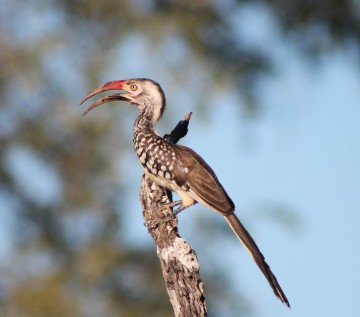
<audio> element<video> element| Band Name | Year Formed | Total Record Sales (Millions) |
|---|---|---|
| The Beatles | 1960 | 600 |
| The Rolling Stones | 1962 | 240 |
| Led Zeppelin | 1968 | 200 |
| Pink Floyd | 1965 | 250 |
| Queen | 1970 | 300 |
| Total Combined Sales | 1,590 | |
<meter>
Volume:
<progress>
Upload: